
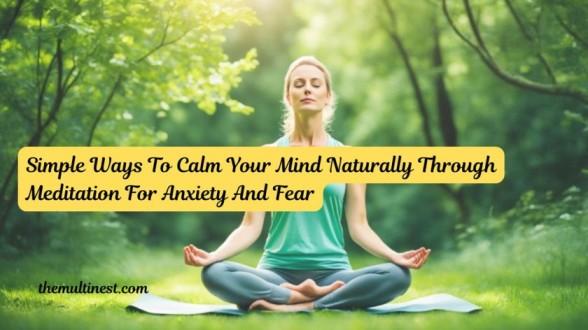
Simple Ways To Calm Your Mind Naturally : Millions of people struggle with anxiety and fear daily. The symptoms may appear through your thoughts running in your head, worrying unceasingly, your chest tightening, and being restless, which could make you feel overwhelmed in doing the simplest of tasks.
Anxiety, however, might look and feel like being in control of one’s life; the truth is that one can regulate it naturally through the appropriate meditation practice.
Meditation makes a great remedy for anxiety and fear as it calms the nervous system, helps slow down the confused thoughts, and produces the sensation of being safe in the mind and body.
The article covers the mechanism of meditation in anxiety, the most effective way to use it, and how to start a habit that will bring enduring emotional stability to your life.
Simple Ways To Calm Your Mind Naturally Through Meditation
What are Anxiety and Fear?
Anxiety has its origin in the mind that is always expecting the worst. Fear is actually the alarm trigger when the sensation of the body’s fight-or-flight response is activated, even when there is no real threat around.
If the body keeps responding this way for a long time, then stress accumulates and peace goes away.
Meditation is the tool that triggers relaxation, which is your body’s counter response of stress. It makes a shift in your body from tired and worn-out mode to a fresh and alert mood. As you continue, your brain gets trained to be in control.
SEO keywords naturally used: meditation for anxiety, meditation for fear, anxiety relief meditation
Technique of Meditation as Anxiety and Fear Treatment
Meditation is a technique that helps in:
- Decelerating racing thoughts
- Lowering stress hormones
- Enhancing emotional awareness
- Deepening inner calm
When you concentrate in silence on the here and now, the brain no longer provides fuel to the fearful thoughts that are mainly about the past or the future. Your brain, through meditation, learns to keep you in the present place and time.
A Complete Guide to Meditation for Anxiety and Fear
Step 1: Prepare a Quiet and Comfortable Space
Find a spot away from the bustle where you will not be disturbed. You may sit either on a chair or on the floor, keep your back straight but without getting stiff. Having the lights dimmed gives the brain a signal to relax at once.
You may close your eyes softly and begin to unwind your body.
Step 2: Pay Attention to Your Breathing
Breathing is one of the most important things in the process of calming down anxiety. Take long and shallow breaths through the nose.
- Breathe in slowly for 4 seconds
- Hold your breath for 2 seconds
- Exhale slowly for 6 seconds
The longer your exhalations are, the more your brain gets the signal that you are in a safe space. Keep the breathing pattern of yours as you have been doing for a couple of minutes.
Step 3: Point Out Your Fear Emotion Without Fighting It
The tendency of fear to enlarge is when you try to fight it. Instead of trying to get rid of the thoughts of fear more, try watching them as if you were an outside observer who is neither the controller nor the involved.
Internally repeat: “This fear is here.”, “It will not last forever.”
By doing this, you lessen the power of the feeling and build the skill of self-control.
Step 4: Choose Your Focus
In case the brain’s playing tricks on you, here are some ways to help you get back on track:
- Concentrate on your breath – it’s always there
- Repeating a “mantra” such as calm or safe is your weapon
- Tune in to your heartbeat
Anchors serve the function of bringing your mind back to a point of balance during times of anxiety and panic.
Step 5: Slowly Come Back to Your Surroundings
At the end of 10–15 minutes, take your time and gently open your eyes. Focus on how your body feels. You can use this peaceful state of mind throughout your day.
Time for Meditation Sessions – A Perfect Choice for Daily Anxiety Management
Starting your day with a calm session of meditation means aligning your mood for the rest of the day. At night, it is good to meditate as a way of letting go of stress and clearing one’s mind of worries which, in turn, would help to fall asleep.
Regardless, anytime anxiety strikes, it is possible to meditate. A 5-minute meditation focusing on breathing can be your quick remedy.
What Not to Do During Meditation
Do not make these errors when performing meditations for anxiety:
- Believing the anxiety will vanish at once
- Creating positive thoughts forcibly
- Being hard on yourself for feeling anxious
- Not doing meditation when emotions are intense
Meditation is about being patient and doing it again and again, not about forcing.
Possible Positive Outcomes of Anxiety and Fear Meditation
Go on with spending time in meditation regularly, and you’ll notice:
- Fewer panic attacks and less overthinking
- Greater control over your emotions
- More focus and higher self-confidence levels
- Better sleep
- Long-term mental resilience
Engaging in the regular practice of meditation will definitely raise your ability to stay calm even during challenging situations.
For How Long Should You Meditate Daily?
It is more about your routine rather than how long you meditate. Daily work of 5–10 minutes is a good start. As it becomes familiar to you, stretch your session to 15–20 minutes.
Strong mental health and emotional well-being are some of the things that will come from making meditation a daily habit.
Summary: You are a human, not a bundle of fear
Fear and anxiety are simply what you go through; they are not your whole self. Meditation is a way of developing the skill of giving your attention to emotions without letting them take control over you. You will definitely reach the point where calmness comes naturally to you after continuous practice of meditation.
Meditation for anxiety and fear is not a magical wand that would wipe away all problems in the world, but it does change the way you deal with them. Begin with small steps. Keep on. Have faith in the method.
Read More:
5-Min Holiday Morning Meditation to Elevate Peace and Positive Energy
Things to Consider When Installing a Pool for Your Home
Monika Raisinghani is a content writer with over 10 years of experience writing for different industries. She enjoys turning ideas into simple, useful, and engaging content that people actually want to read. Whether it’s health, lifestyle, business, or technology, she focuses on providing accurate information in a clear and relatable way. She believes good content should be easy to understand, helpful, and written with the reader in mind.