
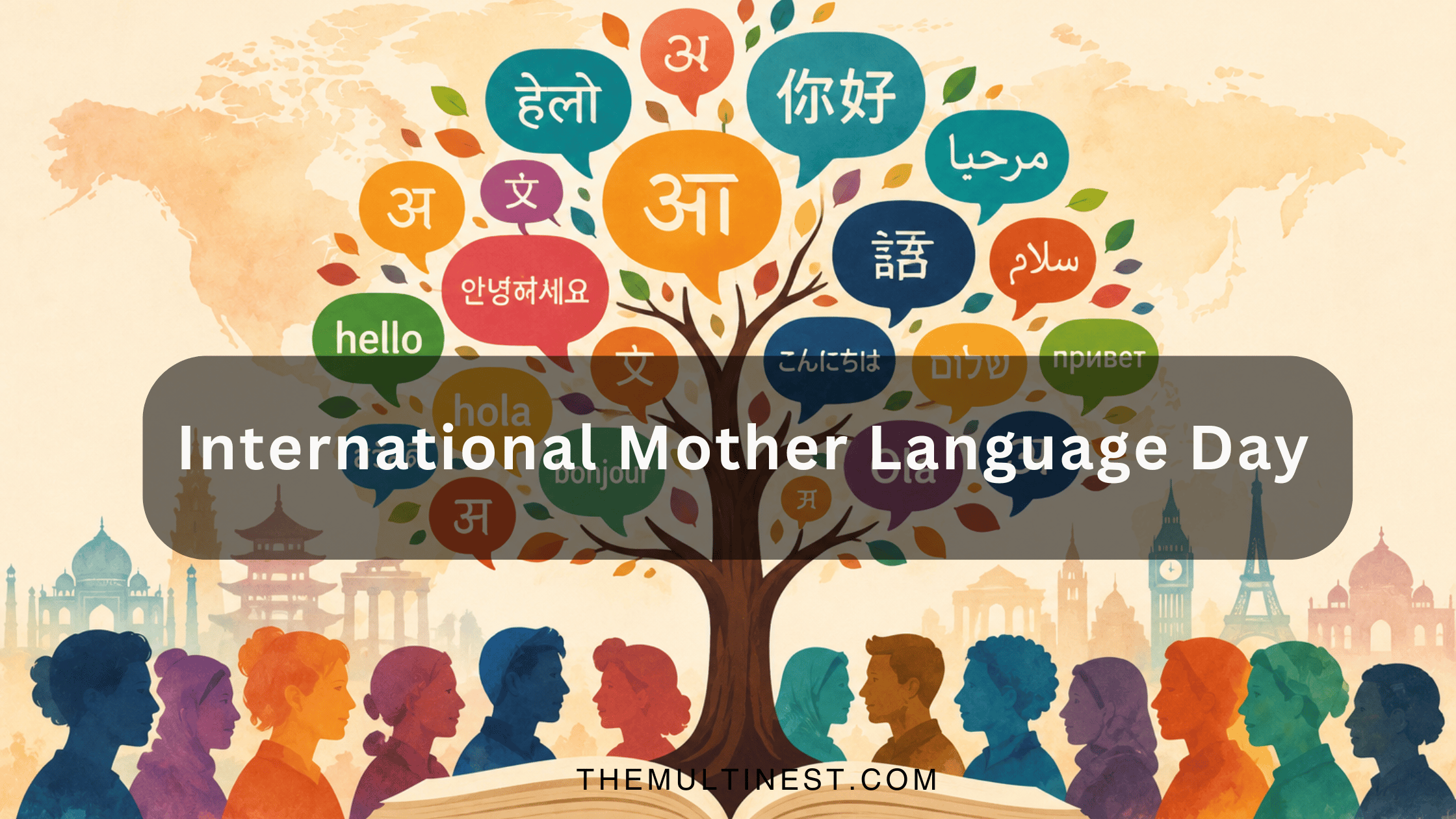
21 Feb – International Mother Language Day is celebrated worldwide annually to acknowledge the essential connection between language and cultural identity. Language isn’t just a tool for communication; it’s a keeper of history, feelings, traditions, and principles that are handed down from one generation to another.
International Mother Language Day is a call to us that conserving and appreciating languages is the foundation for cultural understanding, social integration, and progress on a global scale.
What Does International Mother Language Day Stand For?
International Mother Language Day on 21st February is a day designated by UNESCO to raise awareness worldwide about the importance of cultural and linguistic diversity. This day also serves as a tribute to the language movement, which emphasised the significance of one’s mother language and the right to use one’s native language.
The day aims to foster recognition of language protection, support for multilingual education, and promotion of harmonious coexistence through understanding different cultures on 21 Feb – International Mother Language Day.
The Significance of Mother Languages
One’s mother language is typically the language that a person learns first within the home environment. It is the link that ties people to their origin, and accounts for how they perceive, understand and communicate.
On the occasion of 21 Feb – International Mother Language Day, we put forward:
- The recognition of mother languages as the core of cultural identity
- Their role in the preservation of the past and cultural legacy
- How do they offer a medium for emotional communication and educational support
- Their significance in the promotion of diversity and integration in society
The extinction of a language means, at the same time, the disappearance of a unique perspective of the world.
Language and Learning
The benefits of learning through one’s mother language include increased clarity of understanding, greater originality, and a higher level of confidence—especially in the initial stages of learning.
Studies indicate that optimum learning takes place when education at the early level is in the child’s mother tongue.
The International Mother Language Day brings to light the necessity for educational systems that are multilingual, culturally sensitive, and at the same time, communicatively competent globally.
Education delivered in mother tongues:
- Increases literacy and understanding capacity
- Is a deterrent to school attrition
- Fosters a culture of continuous education
- Leads to the rise of socially cohesive societies
Preserving Linguistic Diversity for Cultural Harmony
Globally, there are thousands of languages, but their future is not secure due to many being endangered. The influence of globalisation and urbanisation has intensified the usage of dominant languages, which often results in the marginalisation of local languages.
During 21 Feb – International Mother Language Day, people and organisations are working together to:
- Sensitise people about the languages that are close to extinction
- Encourage cross-cultural interaction
- Instil the habit of treating all languages, whether major or minor, with respect
Diversity in languages leads to greater cultural wealth and a better understanding among people.
Mother Language and Identity
Language profoundly influences an individual’s identity. It is the vehicle of narratives, melodies, legends, and collective memories. One’s identity is anchored through the use of the mother language.
The occasion of International Mother Language Day should serve as a reminder to us that “To speak someone’s language is to respect their identity”.
Mother Languages – Challenges and Obstacles
Although the mother language is very significant, it is, unfortunately, still subjected to several challenges such as being unrecognised officially, having minimal usage in schooling, and being reduced in handing down to the youngsters.
Among the challenges faced are:
- Dominant languages of the world are being preferred
- Shortage of educational materials in local languages
- Negative attitudes towards vernacular languages
- Fast urbanisation and migration
21 Feb – International Mother Language Day serves to highlight the issues and advocate for the safeguarding of the linguistic heritage.
Technology and Language Preservation
Technology has evolved into an extremely effective instrument in the conservation and propagation of languages. Electronic platforms, applications, online lexicons, and social networking sites provide the means for people to continue learning and be proud of their mother tongues.
Language campaigners and trainers on International Mother Language Day point out the necessity of employing technology for:
- Recording of languages that are on the brink of extinction
- Developing educational materials
- Unite language communities across the world
Technological wonders mean that languages, rather than disappearing, change and develop.
What Can I do to Celebrate International Mother Language Day?
The preservation of mother languages is a possibility that everyone has. Small deeds matter!
Here are some of the things you can do:
- Use and promote the mother language with pride
- Instil in children the importance of native languages
- Engage in reading and writing in your mother tongue
- Lend a hand to local language projects
- Stop discrimination and promote linguistic diversity
Observing 21 Feb – International Mother Language Day refers to the habit of holding faith daily, not limited to one-day events.
International Mother Language Day: Schools and Communities
The two institutions of schools and communities are at the forefront of increasing awareness about languages. Cultural programs, storytelling sessions, and multilingual activities encourage appreciation for linguistic diversity.
On International Mother Language Day, schools often organise events that help students understand the value of language equality and inclusion.
Broad Protection Has to Be the Goal
We should bear it in mind that languages are valuable assets besides humans; 21 Feb – International Mother Language Day is a friendly reminder of that.
Languages encompass our personal and collective history, our values, and our thoughts.
By protecting and valuing the mother tongue, we not only save the cultural diversity but also build social coherence and develop an environment that is inclusive for all. Let this day be a milestone that we mark, to celebrate our origins and to honour every voic,e as every language is equally significant.

Monika Raisinghani is a content writer with over 10 years of experience writing for different industries. She enjoys turning ideas into simple, useful, and engaging content that people actually want to read. Whether it’s health, lifestyle, business, or technology, she focuses on providing accurate information in a clear and relatable way. She believes good content should be easy to understand, helpful, and written with the reader in mind.