
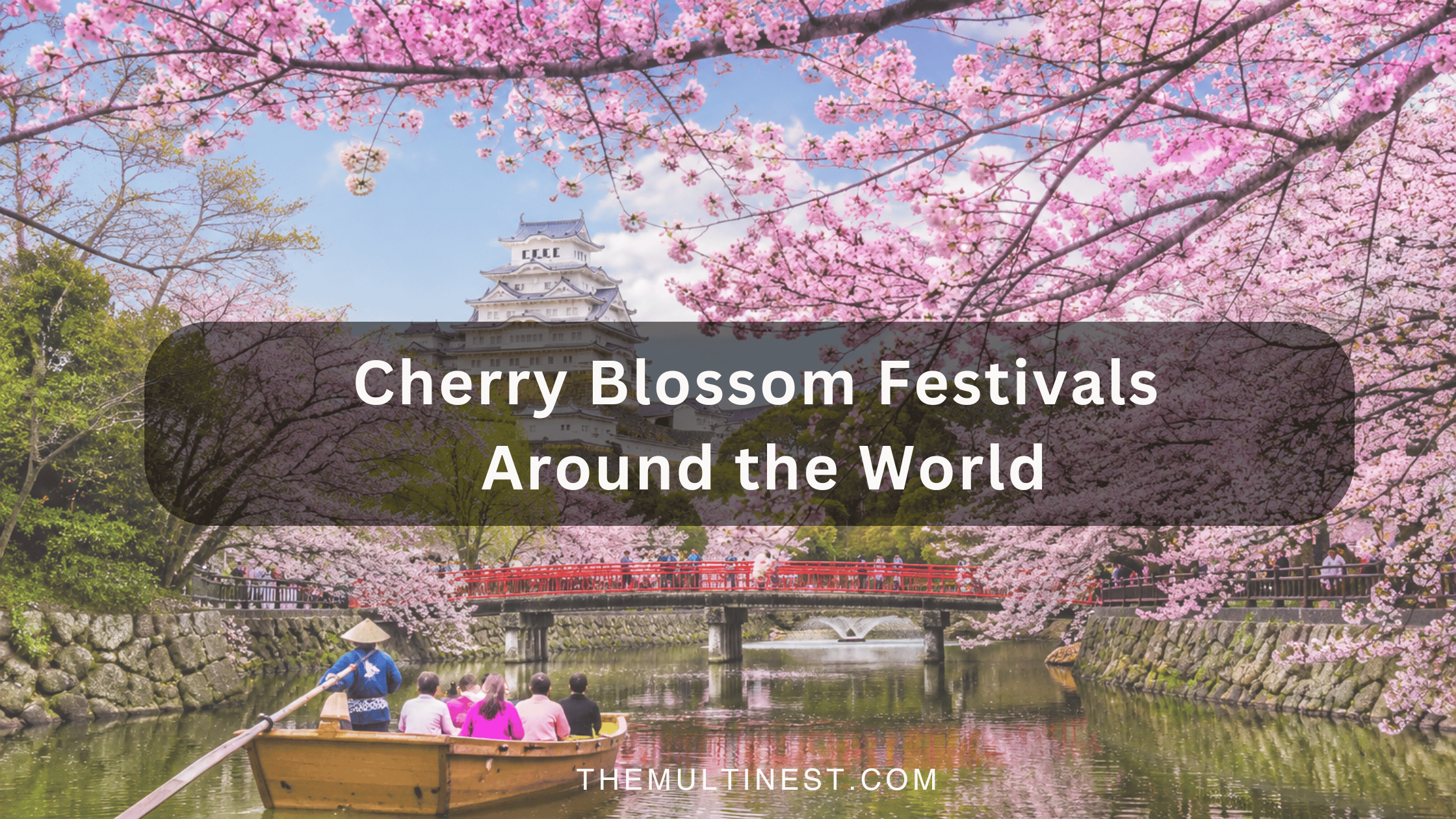
Each spring, beautiful pink cherry blossom petals transform the cities into a place of poetry in motion. The arrival of Cherry blossom festivals, also known as Hanami celebrations, marks the beginning of sakura season—a period that represents beauty, contemplation, and family.
Japan is undoubtedly the birthplace of the Hanami tradition and culture, but the spirit of cherry blossom festivals has since spread worldwide, attracting millions of visitors every year.
Here we will be looking into the meaning of Hanami, its historical and cultural origin in Japan, and the universal symbolism that turned cherry blossom festivals into a global celebration of the power of nature and a new beginning.
What Is Hanami?
Initially, Hanami was translated by the Japanese as “flower viewing.” It has deep roots in Japan, where it has been a custom for numerous generations. The local people, and especially the native Japanese, often gather together under cherry blossom trees to enjoy the fleeting beauty of nature at any given moment.
People have their meals and drinks, talk, and share anecdotes under the trees, while Sakura petals fall around them. Thus, Hanami isn’t only about admiring flowers; it is a metaphor for the transience of human life, which is the basis of Japanese spirituality. The cherry blossoms are beautiful and vibrant, but only last for a very short period; thus, the flowers serve as a reminder of the fact that one must enjoy each moment of life to the fullest.
SEO Keywords naturally included:
Cherry blossom festivals, Hanami celebrations, sakura season, cherry blossom viewing, spring festivals
Sakura Season in Japan: A Cultural Phenomenon
Cherry blossom season is one of the most iconic phenomena in Japan. It typically starts in the southern part of Japan around the end of March and then gradually moves northwards with the rising temperatures.
Due to the utmost significance of the phenomenon, the Japanese meteorological office provides detailed sakura forecasts on a daily basis throughout the season, so that people can plan their Hanami picnics accordingly.
A handful of the most popular Hanami places in Japan are:
- Ueno Park (Tokyo)
- Maruyama Park (Kyoto)
- Philosopher’s Path (Kyoto)
- Osaka Castle Park
At such times, the parks remain open until late, after which lanterns light up the rows of cherry trees, and locals and tourists alike find themselves enveloped in a sense of calm, softness, and an embrace by nature.
Hanami is a perfect blend of old and new; office employees organise after-work feasts, visitors take pictures for their albums, and residents of the city come out to witness the fleeting enchantment of this season.
Cherry Blossom Festivals Around the World
Even though Japan is still the global hub for cherry blossoms and their flowering, the occasions in various parts of the world have adapted the spirit of these Hanami ceremonies and started celebrating them in their own way.
Worldwide Hanami-Inspired Festivals Include:
- Washington, D.C., USA – The National Cherry Blossom Festival is held in honour of the gift of cherry trees from Japan.
- Vancouver, Canada – Cultural events, tea ceremonies, and guided blossom walks are part of the park
- Paris, France – The already famous landmarks get an extra dose of romance from the
- South Korea – Cities like Seoul and Jinhae host massive cherry blossom festivals featuring parades, lights, and night illuminations.
- India & Europe – Botanical gardens and cultural centers are organizing cherry blossom viewing and spring festivals.
During these festivals, various cultures interweave with the Japanese tradition spectacularly to show that the language of flowers is indeed without borders.
Reasons for the Popularity of Cherry Blossom Festivals
A global audience is drawn to cherry blossom festivals because of their enchanting mix of:
- Natural beauty
- Cultural storytelling
- Seasonal travel experiences
- Mindful living and slow moments
In the era of rapid development and advanced technology, Hanami is an opportunity to take a break. It helps people to leave their homes, come in contact with nature, and delight in beauty without engaging in a hectic pace.
Under the cherry tree, photographers, travelers, content creators, and brands find the perfect moment to indulge in a visually and emotionally captivating experience that can be turned into a good story and a compelling engagement.
Cherry Blossom Festivals and Tourism
The sakura season is a huge factor which determines the increase in spring tourism. There is a marked surge in the number of travelers during this period, which makes hotels, airlines, and local businesses benefit greatly from the seasonal rose.
Tourism boards also utilize cherry blossom festivals as the perfect platform to showcase:
- Cultural heritage
- Eco-tourism
- Seasonal travel experiences
Apart from cultural and traditional integrity, these events intend to offer visitor experiences of a higher quality in the form of guided Hanami walks, workshops, and gastronomic festivals.
What Sakura Season Means on a Deeper Level
Cherry blossoms, apart from their beautifying effects, also stand for:
- Renewal and hope
- Life’s fragility
- Gratitude for the present
The world has come to resonate with this Asian philosophy, which is why cherry blossom festivals are a lot more than just moments to capture for the perfect Instagram—they are experiences that touch the soul.
Last Words
Cherry Blossom Festivals and Hanami celebrations are symbolic of the fact that natural beauty is transient and precious. Various places, ranging from the serene parks of Japan to international cities at the peak of the pink glow, all highlight the union of people through nature, culture, and emotion.
Whether your Hanami journey takes place in Japan or under the cherry trees nearby, the essence is unchanged. It tells you to stop for a moment, look up, and enjoy the spectacle of the flowers while they are still here.
Monika Raisinghani is a content writer with over 10 years of experience writing for different industries. She enjoys turning ideas into simple, useful, and engaging content that people actually want to read. Whether it’s health, lifestyle, business, or technology, she focuses on providing accurate information in a clear and relatable way. She believes good content should be easy to understand, helpful, and written with the reader in mind.