
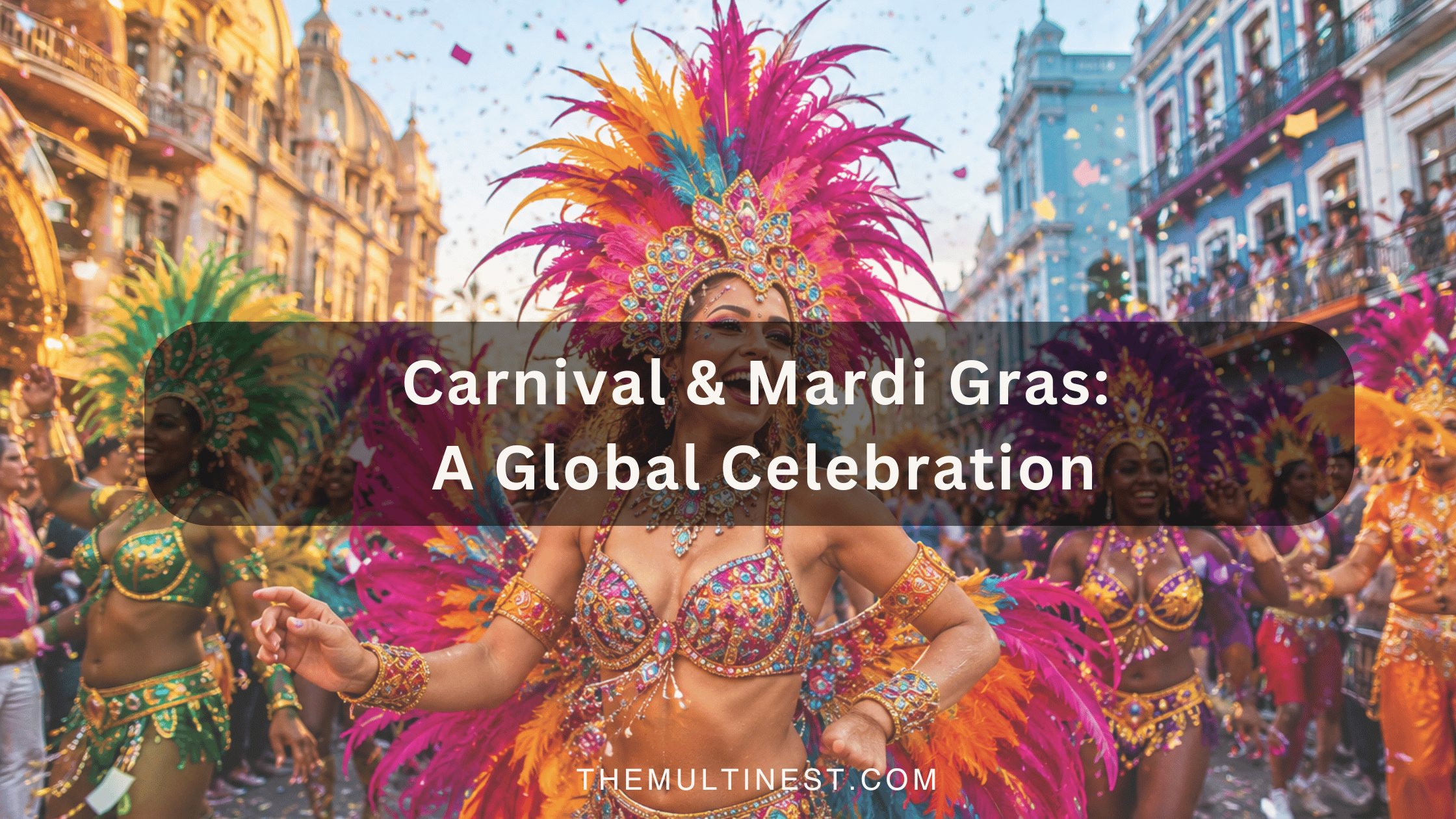
It’s a time when the planet adorns itself with the most vibrant of dresses and takes to the streets. Carnival or Mardi Gras is celebrated as one of the most magnificent cultural events on Earth. The festival of Carnival, which is an encounter of art, personality, and happiness, can be experienced through samba music in Brazil, jazz in New Orleans, and the Puritan European masquerade.
It’s loud, daring, and very cultural.
What Is Carnival or Mardi Gras?
Carnival refers to the festivities that mark the period when one makes a few changes in one’s Christian practices during Lent. French “Mardi Gras,” meaning “Fat Tuesday”, figuratively refers to the last day for one to gorge before fasting.
From centuries to modern day, Carnival was able to break its traditional religious format as it now embodies the art of dialogue, origin, and values of the different communities through various cultural representations, such as parades, songs, dances, costumes, and street parties.
SEO optimized keywords used naturally: Carnival festival, Mardi Gras celebration, Carnival parades, costume festivals, global Carnival
Brazil: The Home of Global Carnaval
The association of Brazil with Carnival exists so strongly that many immediately think of Rio de Janeiro if asked about the festival. Rio Carnival is one of the largest festivals on the planet; it gathers millions of people, visitors, and residents.
Some features of Brazilian Carnival are:
- Each samba school parade is a result of hundreds of hours of rehearsals
- Costumes composed of feathers, sequins, and of high quality
- Impressive floats presenting cultural and social themes
- Blocos, which are very energetic parties taking place outdoors
Brazilian Carnival is more than a show to the world. It is history, a critique, and identity encapsulated in dance and music.
New Orleans: Mardi Gras with Soul
When it comes to Mardi Gras in the USA, no other city but New Orleans is so vibrant at hosting the most eye-catching Mardi Gras events. This Carnival mixes French, African, and Caribbean heritage to give it a distinctive and unique character.
Here are some paramount customs of New Orleans Mardi Gras:
- Grand parades held by social clubs called krewes
- Beads, coins, and other little gifts are thrown to thrill the crowd
- Street dancing, brass bands, and jazz music are going on all the time
- The famous King Cake which is shared during the entire season
New Orleans Mardi Gras is a blend of celebration and heritage, which proves the vitality of culture when different groups are united.
European Carnivals: Elegance Meets Tradition
In Europe, the embodiment of the Carnival spirit is through drama and the stage.
A few of the European Carnivals are:
- Venice Carnival (Italy): Famous for elaborate masks, period costumes, and masquerade balls
- Nice Carnival (France): Flower parades, artistic floats, and Mediterranean style
- Cologne Carnival (Germany): Humorous parades, community participation, and satire
European Carnivals are mostly about an illumination of history, artistry, and symbolism, thereby providing a culturally rich as well as a visually appealing experience.
The Reason Why Carnival Is Celebrated All Around the World
Carnival appeals to people all over the world because the festival gives its attendees a chance to:
- Get out of one’s ordinary role
- Celebrate originality and self-expression
- Keep their cultural heritage alive through the performing arts
- Come together across communities, classes, and backgrounds
For a moment or two, cities turn into stages—and everybody appears to be part of the show.
Carnival, Costumes, and Cultural Identity
The costumes worn at the Carnival have such an important place in the celebration. They are far from “just” clothes; they are deeply embedded with meanings such as symbolism of witch, the devil, political satire to urban legends and myths frequent in the costumes.
Masks especially stand for:
- Being equal and hiding one’s identity
- Getting rid of the limits that society puts on people
- Artistic transformation
Hence, the reason why Carnival is still popular and thriving is that it is continuously changing while keeping the tradition.
Carnival and Day-to-Day Tourism
Carnival and Mardi Gras are a couple of the most important international tourism attraction factors. Local governments prepare to welcome visitors all year round, and at the same time, brands and creators make use of the Carnival time for:
- Cultural storytelling campaigns
- Travel marketing and experiential content
- Fashion, music, and lifestyle collaborations
Nevertheless, the ones that are the most “successful” in terms of Carnival marketing remain the ones that are respectful and do not exploit the culture.
The Deeper Meaning Behind the Celebration
Carnival purports a very powerful message beneath the sequins and noise, which is that:
Celebrate life openly and creatively.
It invites us laugh, dance, express, and connect—before getting back to the dull routine.
In The End
The cultural movements that go beyond festivals are Carnival and Mardi Gras. They cross continents and generations. You’re dancing in Brazil, catching beads in New Orleans, or admiring masks in Europe, the essence of Carnival is to live the moment, celebrate community and culture, and be the most vibrant version of yourself.
Because there are times when the world can’t have its order and quiet time; it rather needs music, movement, and crazy beautiful.
Monika Raisinghani is a content writer with over 10 years of experience writing for different industries. She enjoys turning ideas into simple, useful, and engaging content that people actually want to read. Whether it’s health, lifestyle, business, or technology, she focuses on providing accurate information in a clear and relatable way. She believes good content should be easy to understand, helpful, and written with the reader in mind.