
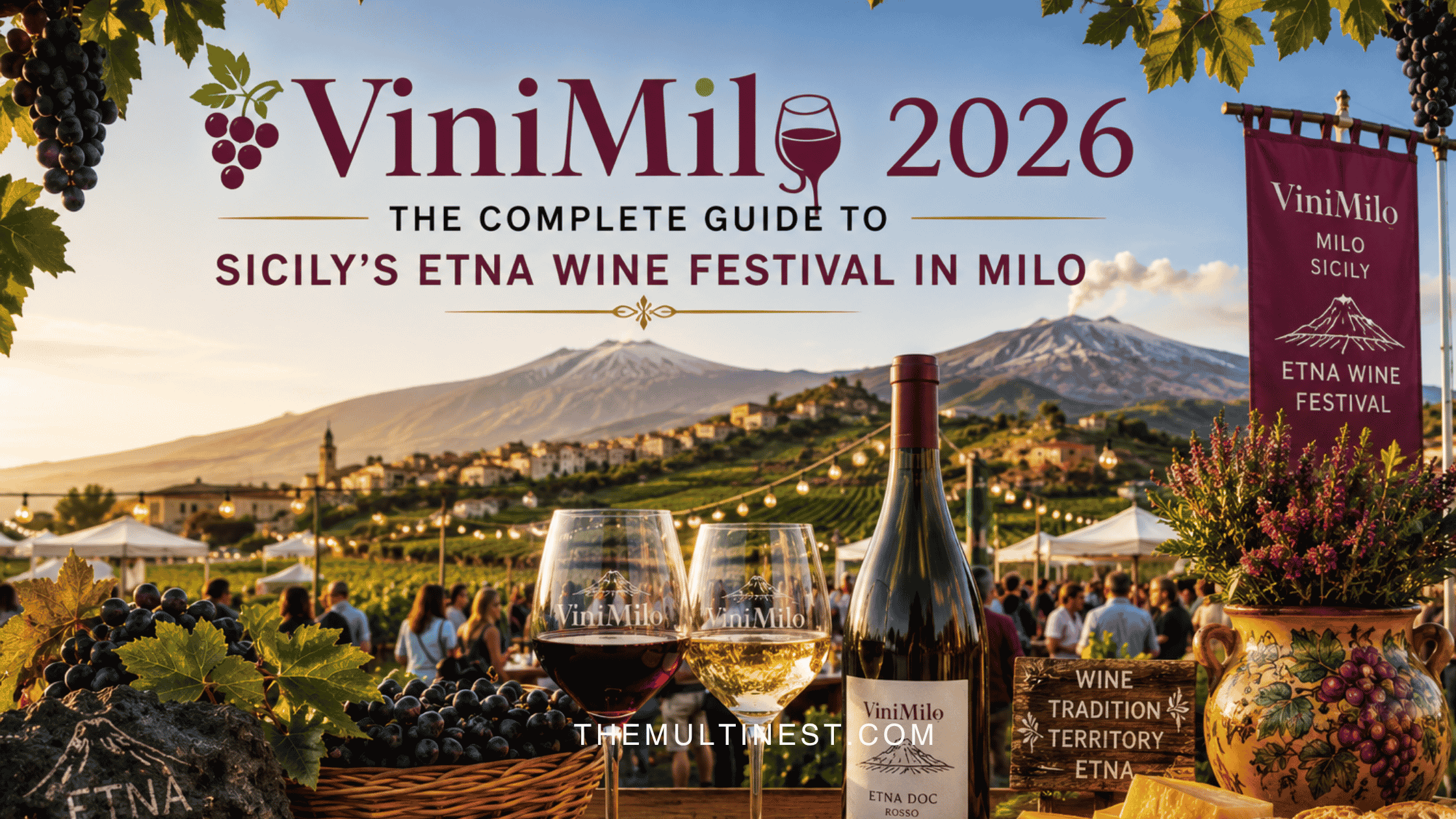
Mount Etna is Europe’s only active volcano with its own wine appellation. Every late summer, the tiny village of Milo celebrates that fact with ViniMilo, Sicily’s oldest wine festival. ViniMilo 2026 runs from August 29 to September 14 in Milo, a small town on Etna’s eastern slopes. If you love wine, volcanic landscapes, or both, this festival deserves a spot on your Sicily itinerary.
This guide covers everything you need to know about ViniMilo 2026. You’ll find the dates, the wines, the village itself, and practical tips for planning your trip.
What Is ViniMilo?
ViniMilo is Sicily’s oldest oenological festival. It celebrates the wines of Etna DOC, the wine appellation that covers Mount Etna’s volcanic slopes. The festival takes place in Milo, a small town of roughly 1,000 residents in the metropolitan city of Catania. Agriculture drives the local economy here, and viticulture covers most of the cultivated land around the village.
ViniMilo has run for decades. By 2023, organizers had reached the 43rd edition, which makes this one of Italy’s longest-running regional wine festivals. Wine experts travel from across Italy every year for comparative tastings, workshops, and debates on the future of the wine industry. The event blends serious wine scholarship with genuine local hospitality, and that combination sets it apart from more commercial wine festivals elsewhere in Italy.
When Does ViniMilo 2026 Take Place?
ViniMilo 2026 runs from August 29 to September 14. That gives the festival roughly two and a half weeks of programming, spread across tastings, workshops, and guided vineyard visits. The dates overlap deliberately with Etna’s early grape harvest, which typically begins in mid-September for lower-altitude vineyards. Visitors can combine a ViniMilo tasting with an actual vendemmia, or harvest experience, at a nearby winery during the same trip.
The Wines of Etna: What Makes Them Different
Etna’s wines carry a signature no other wine region can copy. Three factors create that signature: volcanic soil, indigenous grape varieties, and the contrada cru system, which divides the mountain into distinct vineyard zones the way Burgundy divides its slopes into named crus.
The soil itself tells the story. Etna’s topsoil is a mosaic of three volcanic components: black sciara, which is broken lava rock, coarse volcanic sand, and lapilli, the pea-sized pumice thrown out during eruptions. Vines grow on terraces cut into this soil at altitudes between 400 and 1,100 meters. That range lets a single producer bottle a crisp, high-altitude Carricante white from 1,000 meters and a structured, lower-altitude Nerello Mascalese red from just a few kilometers away.
Nerello Mascalese is the mountain’s signature red grape. It’s an ancient variety, present on the island since Greek settlers first arrived between the 8th and 5th centuries BC. The grape produces light-colored, aromatic wines with crisp acidity, often compared to Pinot Noir for their elegance rather than power. Etna Rosso, the region’s flagship red wine, must contain at least 80% Nerello Mascalese under DOC regulations, typically blended with Nerello Cappuccio.
Carricante drives the white side of Etna’s wine identity, especially around Milo itself. Etna Bianco Superiore, a DOC classification built specifically around Carricante, can only use grapes grown in the districts of Milo. That makes the village genuinely central to Etna’s white wine story, not just a convenient festival location. Other native varieties you’ll encounter at ViniMilo include Minnella, Vesparola, and Grecanico, all grown in the surrounding hillsides.
What Happens at ViniMilo
ViniMilo fills its two-and-a-half-week run with tastings, round tables, and guided experiences rather than a single big event day. Stands throughout the village pour Etna’s finest wines alongside typical local dishes and regional products, giving visitors a genuine taste of the area rather than just its wine.
One festival highlight pairs Champagne against Etna Bianco Superiore in a direct side-by-side tasting. That comparison sounds almost provocative, but it makes a real point: Etna’s high-altitude Carricante wines share real structural similarities with Champagne’s cool-climate whites, including bright acidity and mineral tension. The festival also features tastings of Nerello Mascalese vinified as rosé, showcasing a lighter, more approachable expression of the grape that many visitors don’t expect from a volcanic red variety.
Beyond the tastings, ViniMilo organizes workshops on ampelography, the scientific study of grapevines, and presents ongoing research into preserving Sicily’s viticultural biodiversity. Past editions have featured sessions on rare surviving vines, including Bracaù, a variety that survived the phylloxera epidemic that devastated European vineyards in the late 19th century. Musical performances, folkloristic events, and communal meals round out the daily programming, keeping the atmosphere convivial rather than strictly academic.
Why Milo Matters to Etna’s Wine Story
Milo isn’t just a convenient backdrop for a wine festival. The village sits at the heart of the zone that produces Etna Bianco Superiore, arguably the region’s most distinctive white wine. That geographic exclusivity gives ViniMilo a legitimacy that a festival held in a more generic location simply couldn’t claim.
Walking through Milo during the festival means walking through the actual vineyards that produce the wine in your glass. Guided tours take visitors directly into the terraced vineyards and into the wineries themselves, connecting the tasting experience to the land and labor behind it. For anyone genuinely curious about how volcanic terroir shapes a wine’s character, seeing the black lava soil firsthand adds a dimension no tasting room alone can provide.
Combining ViniMilo With an Etna Harvest Experience
Because ViniMilo 2026 overlaps with the start of Etna’s grape harvest, visitors can pair the festival with an actual vendemmia experience at a nearby winery. Etna’s harvest typically runs from mid-September into October, with some higher-altitude vineyards not finishing until late October. The steep, terraced vineyards don’t allow mechanical harvesting, so pickers work entirely by hand. This makes the harvest season a genuinely labor-intensive, community-driven event.
Most agriturismi and wine estates in the Etna DOC zone offer half-day harvest experiences during these weeks. A typical package includes an early vineyard arrival. One to two hours of hand-picking and sorting alongside the harvest crew, a tour of the cantina and the palmento. The traditional stone building used for pressing grapes, and a long lunch with several courses paired against Etna wines. Half-day experiences generally run between €50 and €80 per person in 2026. While full-day packages that include a cellar tour and a tasting flight run between €120 and €150. Booking two to three weeks ahead is wise, since weekend slots fill first.
Planning Your Trip to ViniMilo 2026
Milo sits on Etna’s eastern slopes, within reach of Catania, Taormina, and the broader northeastern Sicily wine country. Most visitors base themselves in Catania or Taormina and drive up to Milo for the festival. Accommodation options directly in the village stay limited.
September brings genuinely pleasant weather to this part of Sicily. Daytime temperatures stay warm without the intense heat of peak summer, and the higher altitude. Around Milo keeps evenings comfortably cool, ideal conditions for both wine tasting and vineyard walking. Pack layers, since temperatures can shift noticeably between the coast and the higher slopes of Etna.
Because ViniMilo runs across more than two weeks rather than a single day. You have real flexibility in timing your visit. Early dates in late August let you combine the festival with Sicily’s late-summer beach season. While dates closer to mid-September let you catch the earliest stretches of the grape harvest happening simultaneously across the region.
Why ViniMilo Deserves a Spot on Your Wine Travel List
ViniMilo doesn’t chase the scale of Italy’s biggest wine festivals, and that restraint is exactly its appeal. The event stays genuinely focused on quality over quantity, and on tradition and grape variety over standardization, values the festival has held consistently across more than four decades of editions. For travelers who want to taste Etna’s wines in the actual place they’re grown, surrounded by people who’ve spent generations working this volcanic soil, ViniMilo offers something far more authentic than a wine festival built purely for tourists.
Frequently Asked Questions About ViniMilo
When does ViniMilo 2026 take place?
ViniMilo 2026 runs from August 29 to September 14, 2026, in Milo, Sicily, on the eastern slopes of Mount Etna.
Where is Milo, and how do I get there?
Milo is a small village of about 1,000 residents in the metropolitan city of Catania, on Etna’s eastern slopes. Most visitors base themselves in Catania or Taormina and drive up to Milo, since the village itself has limited accommodation.
What wines does ViniMilo focus on?
ViniMilo celebrates the wines of Etna DOC, especially Nerello Mascalese, the region’s signature red grape, and Carricante, the white grape behind Etna Bianco Superiore. Other native varieties featured include Nerello Cappuccio, Minnella, Vesparola, and Grecanico.
Is ViniMilo the same as the Etna grape harvest?
No, but the two overlap. ViniMilo is a wine tasting and cultural festival, while the harvest, or vendemmia, is the actual grape-picking season. Etna’s harvest typically runs from mid-September into October, so ViniMilo 2026’s dates let visitors combine both experiences in one trip.
Do I need tickets for ViniMilo?
The festival includes free general admission to many events, though ViniMilo’s Tastings may carry small fees depending on the specific session. Check the official festival program closer to your travel dates for exact pricing on individual tastings and workshops.
What is Etna Bianco Superiore, and why is it linked to Milo?
Etna Bianco Superiore is a DOC classification for white wine made from Carricante Grapes grown exclusively in the districts of Milo. That geographic exclusivity makes Milo genuinely central to this specific wine style, not just a convenient festival host town.
Can I book a harvest experience during ViniMilo?
Yes. Many agriturismi and wine estates in the Etna DOC zone offer half-day or full-day vendemmia experiences during the overlapping harvest weeks. Half-day experiences typically cost €50 to €80 per person in 2026, while full-day packages with a cellar tour run €120 to €150. Book two to three weeks ahead, since weekend slots fill quickly.
What makes Etna wine different from other Italian wines?
Etna wines come from vines grown in volcanic soil at altitudes between 400 and 1,100 meters, using indigenous grape varieties found nowhere else. The mountain’s contrada system divides vineyards into distinct zones, similar to how Burgundy names its individual vineyard crus, giving each Etna wine a specific sense of place.
What is the best time to visit ViniMilo?
Late August dates let you combine the festival with Sicily’s beach season, while dates closer to mid-September overlap with the earliest stages of the grape harvest. Either window offers pleasant September weather, warm days and cool evenings, ideal for both tasting and vineyard walking.
Is ViniMilo suitable for wine beginners, or only experts?
Both. ViniMilo draws serious wine professionals for its workshops and comparative tastings, but the festival’s stands, food pairings, and guided vineyard tours welcome casual visitors just as warmly. No prior wine expertise is necessary to enjoy the tastings or the village atmosphere.

Monika Raisinghani is a content writer with over 10 years of experience writing for different industries. She enjoys turning ideas into simple, useful, and engaging content that people actually want to read. Whether it’s health, lifestyle, business, or technology, she focuses on providing accurate information in a clear and relatable way. She believes good content should be easy to understand, helpful, and written with the reader in mind.