

One night a year, the boundary between costume and character disappears. Streets fill with witches, superheroes, and glowing jack-o’-lanterns. Halloween 2026 falls on Saturday, October 31, and the holiday will once again bring millions of people across the US, UK, Ireland, and beyond into the same shared ritual of costumes, candy, and just enough spookiness to make the night memorable. This guide covers where Halloween actually comes from, how its traditions evolved, and how the world celebrates it today.
What Is Halloween?
Halloween is an annual holiday celebrated on October 31. In its modern form, it centers on costumes, trick-or-treating, pumpkin carving, and community celebrations. But Halloween’s roots stretch back over 2,000 years, long before candy or costume shops existed. The holiday blends ancient Celtic tradition, medieval Christian practice, and centuries of cultural evolution into the night we recognize today.
When Is Halloween 2026?
Halloween always falls on October 31, regardless of the day of the week. In 2026, that date lands on a Saturday. A weekend Halloween tends to extend the celebration, since parties, trick-or-treating, and community events can spread across both. Friday and Saturday night without competing with a school or work schedule the next morning.
The Ancient Origins of Halloween
Halloween’s story begins with Samhain, an ancient Celtic festival celebrated by people who lived roughly 2,000 years ago in the regions now known as Ireland, the United Kingdom, and northern France. Samhain marked the end of the harvest season and the beginning of winter. A transition the Celts treated as spiritually significant. They believed that on the night of Samhain, the boundary between the living and the dead grew thin. Allowing spirits to cross into the world of the living.
To mark the occasion, Celtic communities lit bonfires and gathered for shared rituals. Some villagers disguised themselves in costumes made from animal skins and heads. Believing the disguises would protect them from wandering spirits. Others prepared banquet tables and left food out specifically to placate any unwelcome visitors from beyond. Samhain also functioned as the Celtic New Year. Giving the night an added layer of significance as a moment of transition and renewal.
From Samhain to All Hallows’ Eve
Christianity gradually spread into Celtic lands, and church leaders worked to blend existing pagan traditions with Christian observance rather than eliminate them outright. In the 8th century, Pope Gregory III designated November 1 as a day to honor all saints. A holiday that became known as All Saints’ Day. The evening before it, October 31, took on the name All Hallows’ Eve. Over centuries, that name shortened into “Halloween.”
All Hallows’ Eve absorbed many of Samhain’s existing customs rather than replacing them entirely. The blending of pagan ritual and Christian observance created the layered holiday we now recognize. One that carries both ancient superstition and centuries of religious tradition inside the same night.
How Trick-or-Treating Actually Started
Trick-or-treating feels like a purely modern tradition, but its roots reach back through several distinct historical threads. Around five centuries after Samhain began, a practice called mumming emerged. Costumed villagers, no longer just disguised in animal skins but dressed as ghosts and demons. Went door to door performing songs, dances, and short plays in exchange for food and drink. This wasn’t limited to Halloween either. Mummers appeared at Christmas, Easter, and other feast days throughout the medieval calendar.
A related medieval practice called souling added another thread to the tradition. On All Hallows’ Eve, poor community members went door to door offering prayers for the dead in exchange for food. Typically small pastries known as soul cakes. Irish and Scottish immigrants carried these customs. Along with the broader tradition of guising, to North America throughout the 19th century. Particularly during the mass emigration following the Irish Great Famine.
The Story Behind the Jack-o’-Lantern
Every glowing pumpkin on a porch traces back to an Irish folk tale about a man named Stingy Jack. According to legend, Jack tricked the devil on multiple occasions. But when he died, neither heaven nor hell would take him in. Condemned to wander the earth for eternity. Jack carried a single burning coal inside a hollowed-out turnip to light his way through the darkness.
Irish communities began carving frightening faces into turnips and potatoes. Placing them in windows and near doorways to frighten away Stingy Jack and other wandering spirits. When Irish immigrants brought this tradition to North America. They discovered that pumpkins, native to the continent and far easier to carve. Made a better canvas than turnips ever had. The jack-o’-lantern as we know it today emerged from that practical substitution. And it’s remained a defining symbol of Halloween ever since.
How Halloween Costumes Evolved
Halloween costumes have shifted dramatically across the centuries. Ancient Celtic costumes relied on animal skins and heads, worn specifically to disguise the wearer from malevolent spirits during Samhain. By the medieval period, costumes shifted toward ghosts, demons, and other otherworldly figures worn during mumming performances.
The costume industry as we know it today didn’t emerge until the early 1900s, when two New York businessmen began manufacturing and selling Halloween-specific costumes. That commercial shift transformed Halloween dress-up from homemade disguises into a genuine industry, and costume themes have expanded ever since to include witches, vampires, superheroes, and virtually any pop-culture character imaginable.
Halloween Around the World
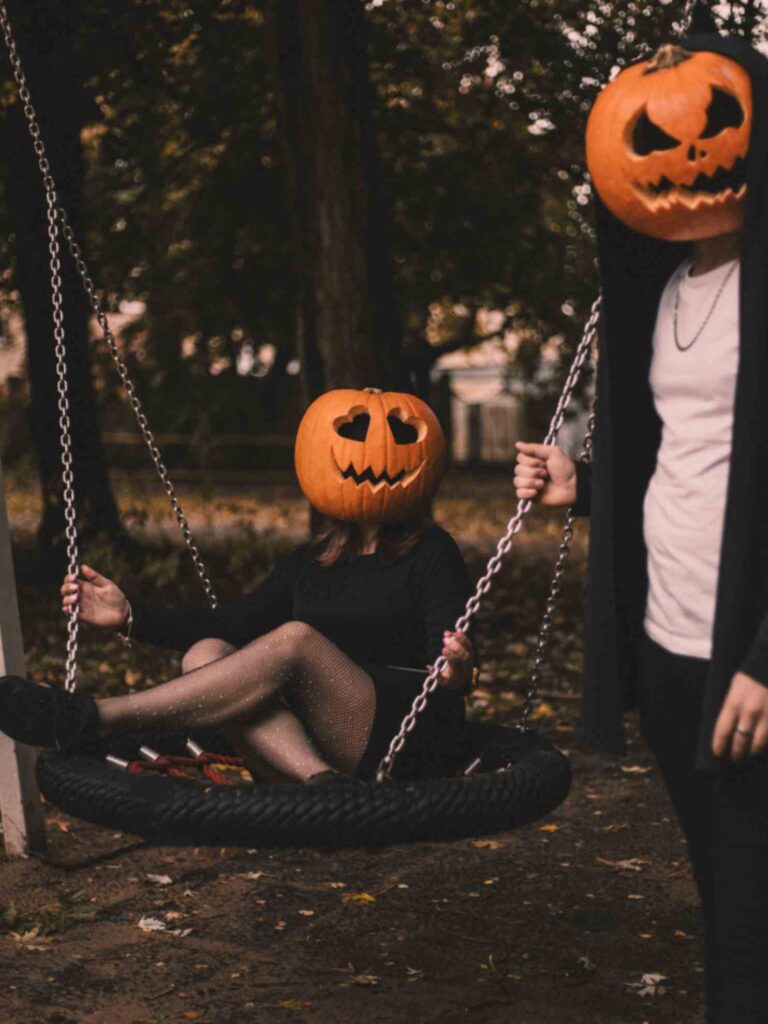
Halloween’s largest and most visible celebrations happen in the United States, where the holiday has become one of the biggest occasions for candy sales all year. Roughly 90 million pounds of chocolate candy sell during Halloween week alone in the US, led by perennial favorites like Snickers and Reese’s peanut butter cups. Trick-or-treating typically runs between roughly 5:30 and 8:30 pm in most American neighborhoods, with porch lights signaling which houses are participating.
The United Kingdom and Ireland maintain a particularly close connection to Halloween’s origins, given that the holiday’s Celtic roots trace directly back to these regions. Traditional customs like carving turnips into lanterns, the direct ancestor of pumpkin carving, still echo through modern Irish and Scottish celebrations, even as pumpkins have largely taken over as the carving vegetable of choice.
Beyond the English-speaking world, other cultures observe their own parallel traditions around the same time of year. Mexico’s Día de los Muertos, or Day of the Dead, honors deceased loved ones with colorful altars and offerings, a joyful rather than spooky observance that shares Halloween’s underlying theme of connecting with the dead, even though the tone and rituals differ significantly. This global variety shows that Halloween isn’t really a single holiday. It’s part of a much older, broader human tradition centered on remembrance, transformation, and honoring those who came before us.
Modern Halloween Traditions
Trick-or-treating remains the tradition most associated with Halloween today, with children in costume going door to door collecting candy from participating neighbors. Pumpkin carving continues to anchor the visual identity of the holiday, with elaborately carved jack-o’-lanterns lining porches and windowsills throughout October. Halloween parties, for both children and adults, round out the celebration, often featuring costume contests, seasonal games, and themed decorations.
Apple bobbing represents one of Halloween’s oldest surviving games, originally developed as a divination game in ancient Ireland. The tradition gained additional cultural weight after Rome invaded Britain, when Halloween traditions merged with the Roman harvest festival honoring Pomona, the goddess associated with fruit and orchards, whose symbol was the apple.
Haunted houses and horror-themed attractions have become a major modern addition to Halloween culture, particularly in the United States, where seasonal attractions draw large crowds throughout October. Retailers have also embraced the holiday’s growing scale, with large-scale decorations, including oversized animatronic figures, becoming an increasingly popular way for households to mark the season.
Halloween Safety Tips
Halloween’s nighttime activities call for a few sensible precautions, especially for families with young children heading out trick-or-treating. Reflective tape or glow sticks help improve visibility for kids walking neighborhood streets after dark. Sticking to well-lit areas and crossing streets carefully reduces the most common safety risks associated with the holiday’s evening activities. Parents should also inspect all collected candy before children eat it, a longstanding precaution that remains standard practice across most Halloween celebrations.
Why Halloween Still Matters
Halloween has survived an unusually long journey, from ancient Celtic bonfires marking the turn of the year, through centuries of Christian reinterpretation, into a thoroughly modern, largely secular celebration of costumes and candy. That evolution hasn’t erased the holiday’s original core. Halloween still marks a moment when the ordinary rules loosen slightly, when disguise and transformation take center stage, and when communities come together to mark the darkening days of autumn with light, noise, and a little bit of harmless fright.
FAQS
When is Halloween 2026?
Halloween 2026 falls on Saturday, October 31, 2026.
Where did Halloween originate?
Halloween originated from Samhain, an ancient Celtic festival celebrated roughly 2,000 years ago in what is now Ireland, the United Kingdom, and northern France. Samhain marked the end of the harvest season and the belief that spirits could cross into the world of the living on that night.
Why do we carve pumpkins on Halloween?
Pumpkin carving descends from Irish folklore about Stingy Jack, a man condemned to wander the earth with only a burning coal inside a hollowed turnip to light his way. Irish immigrants brought the tradition to North America, where pumpkins replaced turnips as the easier material to carve.
How did trick-or-treating start?
Trick-or-treating traces back to medieval practices called mumming and souling, where costumed villagers or the poor went door to door performing or offering prayers in exchange for food. Irish and Scottish immigrants brought related customs to North America in the 19th century, and the modern door-to-door candy tradition solidified by the mid-20th century.
Is Halloween a religious holiday?
Halloween carries both pagan and Christian roots. It developed from the Celtic festival of Samhain and later merged with All Hallows’ Eve, the night before the Christian holiday of All Saints’ Day. Today, most Halloween celebrations in Europe and North America are largely secular.
How much candy is sold during Halloween in the US?
Roughly 90 million pounds of chocolate candy sell during Halloween week in the United States, making it one of the biggest candy-buying periods of the entire year.
What time does trick-or-treating usually happen?
Most American neighborhoods run trick-or-treating between roughly 5:30 and 8:30 pm, with porch lights typically signaling which households are participating.
Does every country celebrate Halloween the same way?
No. The United States and United Kingdom celebrate with costumes, trick-or-treating, and pumpkin carving, while countries like Mexico observe parallel traditions such as Día de los Muertos, which honors deceased loved ones through colorful altars and offerings rather than costumes and candy.
What is Allhallowtide?
Allhallowtide is a three-day Christian observance dedicated to remembering the dead. It begins with All Hallows’ Eve on October 31, continues with All Saints’ Day on November 1, and concludes with All Souls’ Day on November 2.
What safety precautions matter most on Halloween?
Using reflective tape or glow sticks improves visibility for trick-or-treaters after dark. Sticking to well-lit streets, crossing carefully, and inspecting all candy before children eat it remain the most widely recommended safety practices for the holiday.
Halloween’s date never changes, but local trick-or-treating times, community events, and safety guidance can vary by neighborhood and country. Check local municipal or community announcements closer to October 31 for specific details in your area.

Monika Raisinghani is a content writer with over 10 years of experience writing for different industries. She enjoys turning ideas into simple, useful, and engaging content that people actually want to read. Whether it’s health, lifestyle, business, or technology, she focuses on providing accurate information in a clear and relatable way. She believes good content should be easy to understand, helpful, and written with the reader in mind.